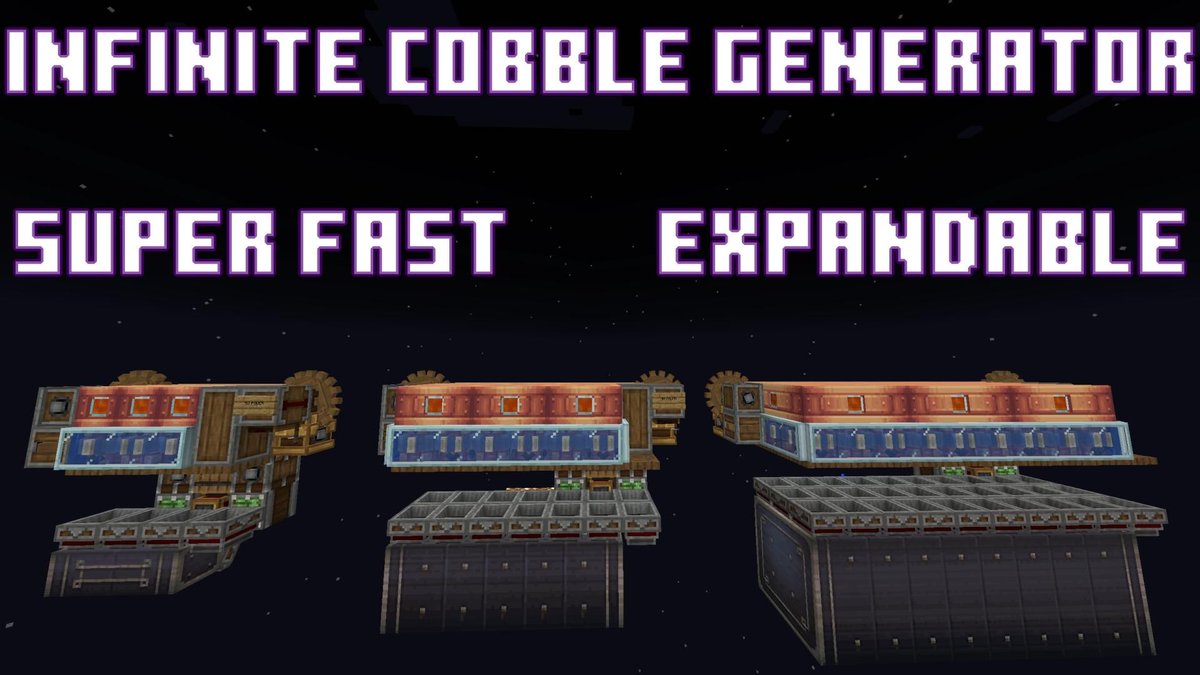
The moment you realize your pickaxe isn't quite cutting it, and your chest full of cobblestone is perpetually empty, you start dreaming bigger. You start dreaming of Advanced & Automated Cobblestone Generator Systems. These sophisticated Minecraft contraptions transform the humble water-meets-lava interaction into an inexhaustible, often hands-free, source of one of the game's most fundamental building blocks. It’s not just about getting more cobblestone; it’s about liberating your time for grander builds, complex redstone projects, or epic explorations.
At a Glance: Why Go Automated?
- Unlimited Supply: Generate an infinite stream of cobblestone blocks from just a few buckets of lava and water.
- AFK-Friendly: Many advanced designs allow for completely "Away From Keyboard" production, so you can gather materials while doing other things.
- Efficiency Boost: Exponentially increase your cobblestone output compared to manual mining, saving countless hours.
- Renewable Resource: Exploit a core game mechanic to create a perpetually regenerating resource, unlike mining finite ore veins.
- Foundation for Innovation: Master redstone and complex mechanics, applying those skills to other automated farms.
The Genesis of Cobblestone: A Fundamental Reaction
At its heart, every cobblestone generator, from the simplest trench to the most elaborate automated factory, relies on a basic principle: the interaction between water and lava. Understanding this isn't just trivia; it's the key to diagnosing problems and building smarter.
Here's the magic formula:
- When flowing water meets a still lava source block, you get obsidian.
- When flowing lava meets a still water source block, you get stone blocks.
- Crucially, when flowing lava meets flowing water (specifically, flowing lava touches a block next to a flowing water block), you get cobblestone. This last interaction is our golden ticket.
This continuous reaction makes cobblestone a truly renewable resource, a stark contrast to finite ores or structures. With the right tools, like a Fortune-enchanted pickaxe, you can even multiply your yield, further solidifying cobblestone's role as a cornerstone (pun intended!) of any serious Minecraft endeavor. If you use a Silk Touch pickaxe, however, you'll get regular stone blocks instead, which can be useful for other builds.
From Manual Labor to Mechanical Marvels: The Evolution of Cobble Generators
Before we dive into the behemoths of automation, it’s vital to appreciate the stepping stones. Each generator design builds on the last, introducing new concepts and efficiencies.
The Humble Start: Simple Cobblestone Generation
Every Minecraft journey begins somewhere, and for cobblestone, it's often a single lava and water bucket. This basic setup, typically a 4-block long, 1-block wide, 1-block deep trench with a broken block, allows flowing water to meet flowing lava, creating a single, minable cobblestone block. It's the go-to for early-game survival or resource-constrained maps like Skyblock, where every block counts.
- Why it's important: Establishes the core mechanics.
- Limitation: Requires constant player presence and manual mining, making it incredibly slow for large projects.
Elevating Efficiency: Adding a Collection System
Once you've outgrown the manual grind, the next logical step is to automate item collection. This popular design still requires manual mining, but it introduces hoppers and chests to gather the fruits of your labor automatically. You'll typically build a small chamber with waterlogged stairs, creating a central point where lava flows over water, producing cobblestone directly above hoppers connected to chests.
- Key Upgrade: Items automatically funnel into storage, reducing inventory management.
- Building Blocks: Requires a few water buckets, a lava bucket, inflammable stairs, solid blocks, hoppers, chests, and a sign to contain water.
- Process: After setting up the double chest and hoppers below, you surround them with solid blocks, place stairs, waterlog them, and then create a lava source directly above the water flow. Cobblestone generates, is mined, and drops into the hoppers.
While a significant improvement, this still relies on you, the player, to mine the cobblestone. To truly embrace automation, we need to introduce redstone. If you're looking for more basic designs to get started, you might want to learn how to Build your own cobble generator first.
The Pushing Power: Piston-Based Cobblestone Generators
This is where true automation begins to shine. Piston-based generators don't just create cobblestone; they push it. This design uses pistons to move newly formed cobblestone blocks into an accessible mining array.
How it works (Simplified):
- Generation Module: Similar to the popular design, water and lava create cobblestone at a specific point.
- Detection & Pushing: As a new block forms, it might be detected by an observer (in more advanced piston setups) or simply pushed by a series of pistons wired with redstone.
- Redstone Clock: A basic redstone clock (e.g., using repeaters and torches) can periodically activate the pistons, pushing multiple blocks in a line.
Components:
- Water & Lava buckets.
- Multiple pistons (sticky or regular, depending on the push/pull needs).
- Redstone dust, repeaters, torches, and a lever for control.
- Inflammable solid blocks for structure and containment.
Advantages: - Automated Pushing: Eliminates the need to constantly move your character to mine.
- Scalability: Can be expanded to push long lines of cobblestone, increasing efficiency.
- Reliability: Once built, these systems are generally stable.
Pitfalls to Avoid: - Piston Push Limit: Pistons can only push 12 blocks at a time. Exceeding this limit can cause blocks to get stuck or even break parts of your generator.
- Lava to Obsidian: A common error is allowing water to flow directly into the lava source, creating obsidian instead of cobblestone. Ensure water flows over the lava.
- Block Updates: Improperly designed redstone can lead to slow generation. Observers are key here, instantly detecting new block formation to trigger pistons.
The Apex of Automation: Fully Automated Cobblestone Generator Systems
Now we're talking true set-it-and-forget-it production. The "Fully Automated Cobblestone Generator" goes beyond simply pushing blocks; it destroys them and collects the drops, often utilizing controversial but highly effective mechanics like TNT duping. These systems are complex, demanding a deep understanding of redstone and game mechanics, but they offer unparalleled output.
This typically involves several integrated sub-systems:
1. The Cobblestone Generation & Pushing Core
This is the heart of the operation, similar to advanced piston generators.
- Setup: Regular pistons face a collection area, topped with waterlogged leaves to contain water. A lava holding ring is built around this.
- Automation: An observer detects the precise moment a new cobblestone block generates. This signal triggers a series of sticky pistons to pull the newly formed block downwards, followed by regular pistons pushing it horizontally towards a destruction zone. This two-stage push-pull is crucial for rapid production.
2. The TNT Duper: Uncapped Destruction
This is the game-changer for speed. A TNT duper is a contraption that exploits a game bug (or feature, depending on who you ask) to create an infinite supply of primed TNT entities from a single TNT block.
Key Components:
- Slime Blocks: Used for their sticky properties to move the TNT block.
- Detector Rail & Minecart: Essential for priming the TNT.
- Dead Coral Fan: A non-solid block that can be pushed by a piston, crucial for triggering the duplication.
- Pistons & Observers: To precisely move and activate the TNT block.
How it Works (Briefly): The TNT block is placed, detected by a rail/minecart, and then a piston pushes a dead coral fan against the primed TNT at the precise moment it's about to fall, causing the primed TNT entity to duplicate without consuming the original block.
Controversy: While highly efficient, TNT dupers are often considered "exploit-y" by some players as they circumvent resource consumption. Check server rules or personal preferences before implementing.
3. The Etho Hopper Clock: Precision Timing
To ensure the TNT duper fires at the perfect interval (not too fast, not too slow), an Etho Hopper Clock is frequently employed. This redstone clock provides adjustable, reliable timing.
Mechanism: Two hoppers face each other, with comparators reading their fullness. A sticky piston connected to a redstone block moves between two positions, powering different circuits. Items (typically 4) shuttle between the hoppers, and when they all transfer, the comparator signal changes, triggering the piston. The number of items determines the delay.
Integration: An observer from the cobblestone generator often triggers this clock, ensuring TNT blasts only occur when there's actually cobblestone to destroy.
4. The Robust Collection System
Blasting thousands of cobblestone blocks creates a huge item flood. A well-designed collection system is paramount.
Design:
- Obsidian Platform: A large (e.g., 11x11) platform of obsidian with 2-block tall walls is built below the TNT blast zone. Obsidian is blast-resistant, preventing damage from the TNT.
- Water Channels: Water flows on this platform guide all the dropped cobblestone items towards a central point.
- Hoppers & Chests: A dense array of hoppers at the central collection point feeds into an extensive network of double chests for long-term storage.
- Item Filters (Optional): For multi-purpose farms, item filters can sort out unwanted drops, but for pure cobblestone, it's usually just direct storage.
Operating Your Cobblestone Superfactory
The fully automated system operates in a harmonious (and often loud) loop:
- Cobblestone rapidly generates at the core.
- Observers detect new blocks, triggering pistons to push them into the blast zone.
- The Etho Hopper Clock, synchronized with the generator, activates the TNT duper.
- Primed TNT entities fall and explode, instantly breaking the cobblestone into collectible items.
- Water channels sweep the items into the hopper-chest storage system.
Critical Maintenance & Troubleshooting:
- Piston Limit: Always monitor the push limit of your pistons. If a regular piston attempts to push more than 12 blocks, it can get stuck or even delete lava source blocks, bringing your entire operation to a halt. Deactivate the generator via a lever before this happens.
- Lava Loss: If a lava source block is accidentally destroyed (e.g., by a malfunctioning piston or an uncontained TNT blast), refill it immediately.
- Redstone Breaks: Complex redstone can be finicky. Double-check all wiring, repeater delays, and observer placements if the farm stops working.
Advanced Optimizations for Maximum Yield
Beyond the core designs, several techniques can further supercharge your cobblestone production:
- Multiple Generation Points: The simplest way to increase output is to simply build more generators side-by-side or stack them vertically, each with its own water/lava interaction.
- AFK Mining Stations: If you're still mining manually (even with piston pushers), create an AFK station. This typically involves a weighted pressure plate or tripwire that detects your presence, holding down your mining button so you can walk away while your pickaxe grinds away. Ensure your pickaxe has Unbreaking and Mending for truly long AFK sessions.
- Pickaxe Enchantments:
- Fortune III: Absolutely essential for maximizing output. Each cobblestone block can drop multiple items, significantly increasing your haul.
- Efficiency V: Speeds up mining, crucial for piston-based farms where you're manually breaking a line of blocks.
- Mending & Unbreaking: For prolonged AFK use, these ensure your pickaxe doesn't break, keeping your farm running indefinitely as long as you have XP.
- Blast Protection: When dealing with TNT dupers, wearing blast protection armor can prevent accidental death if you need to perform maintenance near the blast zone.
Common Questions & Misconceptions
"Do automated cobblestone generators cause lag?"
Yes, especially TNT dupers. The sheer volume of block updates, item entities, and redstone activity can put a strain on your game client and server. For multi-player servers, always check with administrators before deploying large-scale TNT dupers. Optimizing your build to minimize item accumulation (e.g., larger collection systems) and using efficient redstone can help.
"Are TNT dupers considered cheating?"
This is a community debate. Some view them as exploiting a bug, while others see them as an advanced redstone mechanic. Many servers ban them, while others embrace them. Always clarify the rules of any server you play on. In single-player, it's entirely up to you!
"Can I automate the placement of lava and water buckets?"
No, not directly in a survival-friendly way. Water and lava source blocks require a player to place them using a bucket. However, once placed, they are permanent components of the generator.
"How do I make sure my water/lava doesn't turn into obsidian or stone?"
The critical difference is whether the water/lava is flowing or a source block.
- Obsidian: Flowing water over a source lava block = obsidian.
- Stone: Flowing lava over a source water block = stone.
- Cobblestone: Flowing water meets flowing lava = cobblestone.
To get cobblestone, ensure you've created a situation where both liquids are flowing and meet at the desired point. Stairs or signs are often used to define precise flow paths.
Your Cobblestone Empire Awaits
From a simple hole in the ground to a fully automated, TNT-duping factory, the journey of cobblestone generation in Minecraft is a testament to creativity and engineering. Mastering these advanced and automated systems isn't just about accumulating resources; it's about understanding complex game mechanics, embracing redstone, and ultimately, building a more efficient and powerful base.
Whether you're looking to fuel a mega-build, stock your chests for endless crafting, or simply marvel at the beauty of a self-sustaining machine, the knowledge you've gained here will empower you. Start small, understand each component, troubleshoot patiently, and soon you'll have an infinite supply of cobblestone flowing directly into your storage, freeing you to conquer the next big challenge Minecraft throws your way. Now, go forth and build your cobblestone empire!