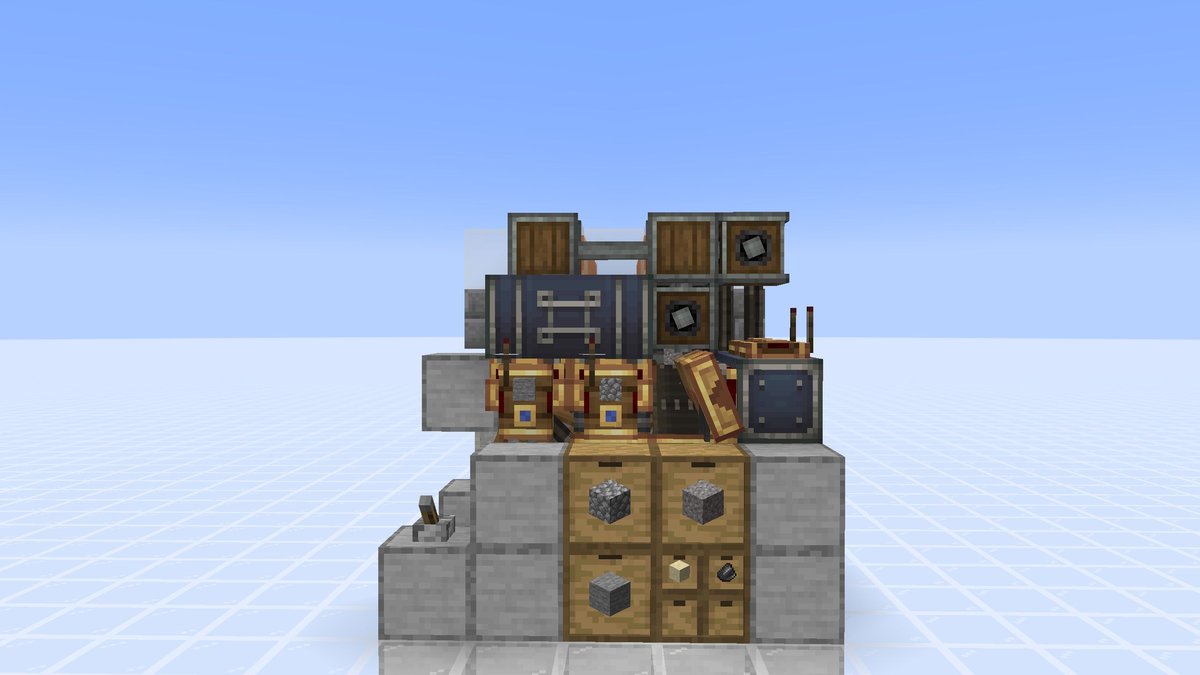
The Unending Supply: Why Every Minecraft Player Needs a Cobblestone Generator
Cobblestone is the backbone of many Minecraft builds, from humble starter homes to sprawling castles. But constantly mining for it can be a chore, especially in resource-limited worlds like Skyblock. Enter the cobblestone generator: a simple yet ingenious contraption that provides an infinite supply of this versatile block.
Whether you're new to the game or a seasoned crafter, understanding how to harness the elemental powers of lava and water to create an endless resource stream is a game-changer. This guide will walk you through everything, from the most basic setup to advanced, fully automated systems that do all the work for you.
The Core Concept: How Lava Meets Water to Make Magic
At its heart, every cobblestone generator relies on a fundamental Minecraft mechanic: the interaction between flowing lava and flowing water. When these two elements meet under specific conditions, they don't just sizzle; they create new blocks. This renewable resource system is what makes infinite cobblestone possible.
It's a delicate balance: flowing water over a still lava source creates obsidian, while flowing lava touching a still water source gives you stone blocks. The sweet spot for cobblestone? That's when both the lava and water are flowing as they meet. To truly grasp the science behind these amazing contraptions and prevent common mistakes, you'll want to Learn Cobblestone Generator Basics.
Gathering Your Gear: Essential Materials for Any Generator Build
Before you can start churning out blocks, you'll need the right tools and resources. The good news is that even the most basic cobblestone generators require very few materials, making them accessible early in your survival world. As you scale up, the material list grows, but the core components remain simple.
For basic setups, you'll primarily need buckets for water and lava, along with some sturdy, inflammable blocks to contain your liquids. Advanced designs introduce redstone components, pistons, and hoppers. To get a comprehensive checklist of everything you might need for builds of all sizes, explore our guide on Essential Materials and Resources for your next project.
Your First Steps: Simple & Reliable Cobblestone Generators
Starting small is smart, especially if you're new to generators. These designs are incredibly easy to build, require minimal resources, and are perfect for getting your infinite cobblestone supply up and running in minutes. They are the backbone of any Skyblock survival.
Your Very First Cobble Generator: The Simplest Design
This minimalist generator is often the first thing new Skyblock players build. It's incredibly forgiving and sets the stage for more complex creations.
- Required Resources:
- 1 Bucket of Water (or 1 Ice Block)
- 1 Bucket of Lava
- A flat area of at least 4x1 blocks.
- How to Build It:
- Dig a 1-block deep hole and a 2-block deep hole directly adjacent to it.
- Place water in the 1-block deep hole; it will flow into the 2-block deep hole. (If using an ice block, place it in the 1-block hole and break it).
- Leave a 1-block gap from the 2-block deep hole, then dig another 1-block deep hole.
- Place lava in this new 1-block deep hole.
- Break the block separating the lava and water. A cobblestone block will form with a hissing sound.
- Mine the generated cobblestone block. A new one will continuously appear in its place.
- Safety Tips: To avoid falling into lava, dig a hole next to the generated cobblestone and stand there to mine. Consider covering the lava and water with non-flammable blocks (e.g., cobblestone, dirt, clay) to prevent accidental falls and burning of generated cobblestone.
Boosting Output: The Expanded Cobblestone Generator
Once you're comfortable with the basic design, expanding it to generate multiple cobblestone blocks simultaneously is the next logical step. This significantly increases your production rate without adding much complexity.
- Required Resources: Multiple water buckets, multiple lava buckets, and a larger flat area.
- How to Build It (for a 4-block output):
- Extend the initial 2-block deep hole from your basic generator by 3 additional blocks in a straight line, creating a total 4-block long, 2-block deep trench. This ensures proper water flow.
- Dig 3-block long, 1-block deep trenches straight out from the remaining 3 blocks in your original generator row, aligning them with the 2-block deep trench. This creates a 4x4 square layout.
- Place water in each block of the row next to the original water source using a bucket. The water will flow into the 2-block deep trench.
- Place lava in each block of the row next to the original lava source using a bucket.
- Mine the resulting 4x1 row of cobblestone as it appears.
- Optional Automation for Collection: Dig two blocks deep directly underneath the generator, place a row of hoppers, and then a row of chests under the hoppers. Generated cobblestone will automatically be collected, though you'll still need to manually mine it.
These foundational builds are excellent for manual mining and early-game resource gathering. If you're ready to Build simple cobblestone generators with even more detailed instructions and troubleshooting, our dedicated pillar has you covered.
Smart & Space-Saving: Compact Cobblestone Generator Builds
Efficiency doesn't always mean massive scale. Sometimes, a compact design that neatly integrates collection systems is exactly what you need. These generators are perfect for saving space while still providing a steady stream of cobblestone directly into your storage.
The Popular Compact Design with Integrated Collection
This is a go-to design for many players who want efficiency without a huge footprint. It's relatively easy to build and sets up an automatic collection system right from the start.
- Required Resources:
- 2 Water Buckets
- 1 Lava Bucket
- 5 Stairs (inflammable material)
- Solid Blocks (inflammable material)
- 5 Hoppers
- 2 Chests
- 1 Sign
- How to Build It:
- Place a double chest in the ground.
- Hook up five hoppers, ensuring one hopper faces into the chest from above and the others connect sequentially.
- Surround the hoppers and the chest with solid blocks.
- Place five stairs on the solid blocks directly attached to the hoppers.
- Place another layer of solid blocks on top of the bottom solid blocks.
- Place a sign on one solid block, at player head height, above the chest.
- Waterlog the stairs.
- Place a third layer of solid blocks above the stairs, existing blocks, and the sign.
- Place a lava bucket one block above the flowing water in the center.
- Stand on the chest and continually break the generated blocks for collection.
For more clever designs that maximize output in minimal space, make sure to Discover Space-Efficient Cobblestone Builds in our specialized guide.
Stepping Up to Automation: Piston-Based Generators
Tired of standing still and constantly mining? Piston-based generators are your first foray into true automation. These clever machines use redstone and pistons to push generated cobblestone blocks towards a fixed mining point, allowing you to focus on mining without worrying about the lava or water source.
The Piston-Powered Push: Reliable Cobblestone Delivery
This design ensures a consistent stream of cobblestone by actively pushing new blocks towards you, making manual mining far more convenient and safer.
- Required Resources:
- 2 Water Buckets
- 1 Lava Bucket
- 8 Pistons
- 2 Redstone Torches
- 1 Redstone Repeater
- 11 Redstone Dust
- 5 Stairs (inflammable)
- Solid Blocks (inflammable)
- 1 Lever
- How to Build It (for one module):
- Place five stairs and surround them with solid blocks. Waterlog the stairs to contain the water.
- Place solid blocks on top of the stairs and on the edges. Extend two blocks outwards from either end away from the stairs.
- Connect these extended ends with more solid blocks to form a ring, creating a lava holding area. Lava will flow down to the waterlogged stairs.
- Break a block diagonally downwards from one stair and place a redstone torch in the hole.
- Place a piston diagonally upwards from the redstone torch, facing towards it.
- Place a solid block attached to this piston and one redstone dust next to it. This piston will push the first generated cobblestone block.
- Place 8 pistons in a row attached to the opposite side of the first piston. Place solid blocks behind them and redstone dust on top of these blocks.
- Break a block diagonally downwards from the last of these 8 pistons and place a redstone torch in the hole.
- Place two redstone dust from this second redstone torch, followed by one redstone repeater, and two more redstone dust, connecting to the redstone dust line behind the 8 pistons. This system pushes multiple cobblestone blocks simultaneously.
- Place lava one block above the first piston and in the center of the ring.
- Place a lever on the solid block attached to the first piston. Activating this lever will permanently power the piston, stopping the machine.
- Stand in position and mine the cobblestone blocks as they are pushed towards you.
The Ultimate Upgrade: Fully Automated Cobblestone Generators
For those who truly want to set it and forget it, fully automated cobblestone generators are the pinnacle of efficiency. These complex machines not only generate cobblestone but also break it and collect it into chests, all without any player interaction. They often employ advanced redstone mechanics, including the legendary TNT duper.
Infinite Cobblestone with a TNT Duper: The Fastest Method
This is an advanced build, requiring a significant number of resources and a good understanding of redstone. The payoff, however, is an incredibly fast and hands-off cobblestone farm.
- Required Resources: (Approximate counts)
- Water Buckets, Lava Buckets
- ~40 Leaves
- 7 Sticky Pistons, 5 Pistons
- 5 Target Blocks, 2 Observers
- 1 Block of Redstone, 2 Redstone Comparators, 3 Redstone Repeaters
- 6 Slime Blocks, 1 TNT, 1 Fence, 1 Dead Coral Fan
- 1 Detector Rail, 1 Minecart, 3 Fence Gates
- Redstone Dust, Solid Blocks
- ~1.5 Stacks of Obsidian
- 2 Levers, 2 Slabs
- Chests, Hoppers (at least 3), 1 Stair
- How to Build It (Key Sections Overview):
- Generator Section: Involves regular pistons for pushing, sticky pistons for pulling, and an observer to detect generated cobblestone, activating the push mechanism. Leaves are used to contain water effectively for generation.
- TNT Duper Section: This ingenious part creates infinite TNT without consuming the original block. It uses slime blocks, a sticky piston, an observer, and a minecart with a detector rail to prime and duplicate TNT. The dead coral fan is crucial for the duper mechanism.
- TNT Channeling Platform: A precisely constructed platform of leaves and fence gates guides the duplicated TNT to the exact spot where cobblestone blocks are pushed, ensuring efficient destruction. Water streams are integrated to push the broken items.
- Etho Hopper Clock for TNT Duper: A compact redstone clock that provides the rapid pulses needed to activate the TNT duper at the perfect timing, ensuring continuous explosions without jamming.
- Collection System: An obsidian-walled pit, usually filled with water streams, funnels all the blasted cobblestone into a series of hoppers leading to large chest storage.
- Mechanism Summary: Cobblestone generates, detected by an observer. Pistons push the blocks. The TNT duper activates, drops TNT, which explodes the blocks. Water channels the items to hoppers and into chests.
- Important Note: These highly complex machines require careful construction and maintenance. If the regular pistons reach their maximum push limit, the machine can malfunction and delete the lava source. Always have a way to deactivate your generator with a lever to prevent damage or loss of resources like your lava source.
Ready to embrace the cutting edge of Minecraft automation? Our in-depth guide will help you Unlock advanced cobblestone generation techniques, including the intricacies of TNT dupers and robust collection systems.
From Manual Mining to Automated Marvels: Your Cobblestone Journey
Building a cobblestone generator is more than just getting free blocks; it's about mastering Minecraft's fundamental mechanics and unlocking new possibilities for construction and survival. Whether you start with a simple 1-block generator or jump straight into a fully automated behemoth, each build teaches you valuable lessons in redstone, resource management, and creative problem-solving.
The journey from manually chipping away at stone to watching a machine tirelessly produce blocks for you is incredibly rewarding. So grab your buckets, gather your redstone, and start building your infinite cobblestone supply today!