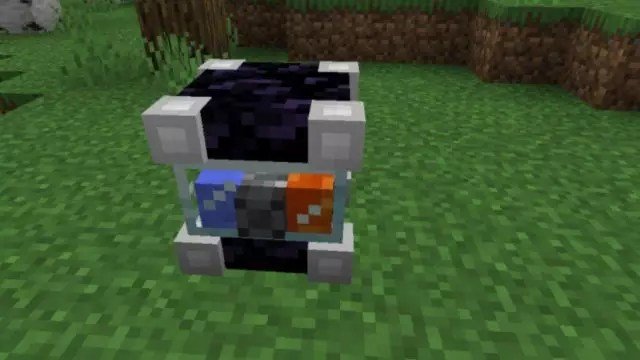
Building massive structures, crafting essential tools, or fueling an army of furnaces in Minecraft all share a common need: resources. And when it comes to readily available, infinitely renewable building blocks, cobblestone reigns supreme. But who wants to spend endless hours mining by hand when you could be exploring, building, or battling? The real magic begins when you start integrating cobblestone generators into automated farms – unlocking AFK efficiency that truly transforms your gameplay.
This isn't just about digging a few blocks; it's about engineering self-sustaining systems that churn out materials while you focus on what truly matters. We'll explore how to evolve from simple starter setups to advanced, fully automated factories that generate an endless supply of this bedrock (pun intended!) resource.
At a Glance: Key Takeaways for Automated Cobblestone
- Renewable Powerhouse: Cobblestone is an infinitely farmable block generated by mixing water and lava.
- Design Progression: Generators range from simple manual designs to complex, fully automated AFK farms using pistons, TNT, and Redstone.
- Efficiency Drivers: Automation is driven by components like pistons (to push blocks), TNT dupers (to break blocks), hoppers (for collection), and Redstone circuitry (for timing).
- AFK Freedom: A well-designed automated farm allows you to stand by and collect vast amounts of cobblestone without any manual input.
- Careful Construction: Advanced farms require precise placement and understanding of Redstone to function correctly and avoid common pitfalls like lava deletion.
The Unseen Value: Why Automate Cobblestone Production?
In Minecraft, resources are broadly categorized into two types: renewable and non-renewable. Non-renewable resources, like diamonds or ancient debris, are finite and cannot be artificially produced (though some can be found in abundance). Renewable resources, on the other hand, can be farmed, multiplied, or generated indefinitely. Cobblestone falls firmly into this latter category, making it a prime candidate for automation.
Why is cobblestone so valuable? It's a foundational crafting ingredient for stone tools, furnaces, dispensers, droppers, and even basic building materials. Running out can halt major projects or leave you scrambling for fuel. By automating its production, you effectively eliminate this bottleneck, freeing up your time and pickaxes for more exciting endeavors. This isn't just convenience; it's a strategic advantage for any serious player.
Understanding the Genesis: How Cobblestone Forms
At the heart of every cobblestone generator lies a fundamental Minecraft mechanic: the interaction of water and lava. These two liquids, when they meet under specific conditions, create solid blocks. The type of block produced depends on their flow states:
- Flowing water over still lava generates Obsidian. This super-tough block requires a diamond pickaxe to mine and is crucial for enchanting tables and Nether portals.
- Flowing lava touching still water creates Stone blocks.
- Flowing lava and flowing water together interact to form Cobblestone. This is the interaction we exploit most for general-purpose generators.
A quick note on Cobblestone vs. Stone: While most generators inherently create the raw material for cobblestone, what you actually mine can vary. If you use a pickaxe enchanted with Silk Touch, you'll get stone blocks directly. Without Silk Touch (e.g., with Fortune or just a regular pickaxe), you'll mine cobblestone. Some specialized "stone generator" designs will yield stone directly, but the core principle remains the same.
From Basics to Brilliance: Evolving Generator Designs
Every automated farm starts with a fundamental understanding of its core component: the generator. Let's trace the evolution of these designs, moving from the simplest, most manual setups to the complex engines of automation.
The Humble Start: Simple Cobblestone Generator
This is the bread-and-butter generator, often the first you build on a resource-limited map like Skyblock. It's cheap, easy, and gets the job done when you're just starting out.
What You'll Need:
- 1 Water Bucket (or 1 Ice Block)
- 1 Lava Bucket
Quick Build Guide:
- Dig a trench that's 4 blocks long, 1 block wide, and 1 block deep.
- Break the second block from one end of this trench. This creates a small pit.
- Place your water source (from the bucket or by breaking an ice block) in the end of the trench closer to the broken block. The water will flow into the pit.
- Place your lava bucket on the other end of the trench, two blocks away from the broken block. The lava will flow, meet the water, and create cobblestone in the broken block's spot.
Operation: Simply stand next to the generated block and mine it. A new one will instantly form in its place. It's manual, but effective for early game resource gathering.
Stepping Up: Stone Generator with Collection System
While the simple generator works, it requires you to stand right next to it and constantly pick up items. This design introduces a basic collection system, making it more efficient, even if you still have to manually mine. Crucially, this particular design generates stone if you're not using Silk Touch, but you'll get cobblestone if you use a Fortune pickaxe.
What You'll Need:
- 2 Water Buckets
- 1 Lava Bucket
- 5 Inflammable Stairs (stone, cobblestone, brick, etc.)
- Solid Inflammable Blocks (e.g., cobblestone, stone)
- 5 Hoppers
- 2 Chests
- 1 Sign
Build Process (A Mini-Farm Blueprint):
- Start by digging a hole and placing a double chest in the ground.
- Connect five hoppers to the chest. One hopper should face directly into the chest from above. The other four should form a cross pattern, feeding into the first hopper or each other, ensuring items dropped in this area funnel towards the chest.
- Surround these hoppers and the chest with solid inflammable blocks. This forms a containment area.
- Place the five inflammable stairs on top of the solid blocks directly above the hoppers. Ensure they are placed so the back of the stair is towards the center, creating a shallow basin.
- Place another layer of solid blocks on top of the bottom solid blocks, creating a wall around the stairs.
- Place a sign on a solid block, positioned above the chest at your player's head level when standing on the chest. This helps contain the water.
- Waterlog the stairs by using a water bucket on each stair. This creates a flowing water current directed towards the center.
- Build a third layer of solid blocks above the stairs, surrounding the water and enclosing the area, except for one central opening.
- Place the lava bucket one block above the flowing water in the center opening.
Operation: Stand on the chest and continually break the stone blocks that generate directly above the hoppers. The broken items will fall into the hoppers and be stored in your chest. For actual cobblestone without Silk Touch, use a Fortune-enchanted pickaxe here.
The Workhorse: Piston-Pushed Cobblestone Generator
Now we're moving closer to automation. This design uses pistons to push generated blocks into a neat line, allowing you to mine multiple blocks from a single, static position. It reduces the need for constant movement and sets the stage for more complex farms. For a deeper dive into building the foundational elements, you might find our guide on making a cobble generator particularly useful.
What You'll Need (for one module):
- 2 Water Buckets
- 1 Lava Bucket
- 8 Pistons
- 2 Redstone Torches
- 1 Redstone Repeater
- 11 Redstone Dust
- 5 Inflammable Stairs
- Solid Inflammable Blocks
- 1 Lever
Building Your Piston Array (Single Module):
- Arrange five inflammable stairs in a row. Surround them with solid inflammable blocks to create a pool.
- Waterlog the stairs. This creates a water source block within the pool.
- Place more solid blocks on top of the stairs and along the edges of your pool, creating an elevated ring.
- Add two blocks on either end, extending away from the stairs. Connect these with more solid blocks to form a full ring, creating a containment area for lava above the water.
- Now for the Redstone: From one side of the stair array, break a block diagonally downwards and place a Redstone Torch.
- Place a piston diagonally upwards from this Redstone Torch, facing towards the center where cobblestone will generate.
- Attach a solid block to this piston and place one Redstone Dust next to it.
- On the opposite side of the first piston, place a row of eight pistons. These will be your "pusher" pistons.
- Place solid blocks directly behind these eight pistons and then lay Redstone Dust over them.
- Break a block diagonally downwards from the last of these eight pistons and place a Redstone Torch.
- Connect this torch to the Redstone Dust behind the pistons. Add two Redstone Dust, followed by one Redstone Repeater (set to 2 ticks), and two more Redstone Dust to complete the connection to the piston line.
- Place your lava bucket one block above the first piston you placed and in the center of the lava containment ring.
- Finally, place your lever on the solid block attached to the very first piston you set up (the one diagonally above the Redstone Torch).
Operation: Toggle the lever to activate the Redstone circuit. Cobblestone will generate, and the pistons will push it along the line. You can stand in one spot and continuously mine.
Actionable Insight: For greater efficiency, you can add a collection system (similar to the previous design, using hoppers and chests) at the end of the piston line, or build multiple modules side-by-side to produce even more cobblestone.
To Stop: Activating the lever effectively powers the initial Redstone Torch, which then deactivates the circuit that controls the pistons. The pistons will retract, and the farm will pause.
The Apex: Fast Cobblestone Generator with TNT Duper (Fully Automated AFK Farm)
This is where true AFK (Away From Keyboard) efficiency comes into play. The Fast Cobblestone Generator combines the steady production of a Redstone-controlled generator with the destructive power of a TNT duper and a timed Redstone clock to create a fully automatic system. It generates, breaks, and collects cobblestone without any player intervention, allowing you to simply come back to full chests.
Caution: This is a complex build. Precise placement of every block and Redstone component is critical. If regular pistons reach their push limit (12 blocks) and you don't deactivate the generator, the machine can malfunction and delete the lava source, halting production. Always include a reliable shut-off switch and monitor your farm.
Core Components Overview:
- The Generator Core: Produces cobblestone and pushes it into the destruction zone.
- The TNT Duper: Infinitely creates and drops TNT blocks without consuming any.
- The Etho Hopper Clock: Precisely times the TNT duper's activation.
- The Collection System: Gathers all the broken cobblestone.
Let's break down its intricate construction into simplified steps:
Part 1: The Generator Core – Churning Out Blocks
This section is responsible for continually generating cobblestone and pushing it towards the TNT blast zone.
Simplified Steps:
- Piston Array: Place five regular pistons facing outwards towards where your collection system will be. These will push the generated cobblestone.
- Water Containment: On top of these five pistons, place five leaf blocks (or other inflammable, non-full blocks like glass panes) and waterlog them. This contains your water source.
- Lava Holding Ring: Above the leaves, build a ring using solid inflammable blocks. Extend the edges slightly to form a basin. This will hold your lava.
- Observation Deck: Place an observer block below the lava holding ring, looking towards the leaves. A solid block behind it can help anchor the Redstone. This observer detects when cobblestone generates.
- Sticky Piston Pullers: Diagonally downwards from your regular pistons, place five sticky pistons facing upwards. These will pull down newly generated cobblestone.
- Target Blocks: In a hole adjacent to the sticky pistons, place five target blocks. These blocks are excellent for Redstone signals.
- Redstone Circuitry: Connect the observer to your sticky pistons and target blocks using Redstone Dust, solid blocks, and a Redstone Repeater. The repeater (set to 2 ticks) will ensure proper timing for the piston sequence.
- Lava Source: Place your lava bucket within the holding ring.
- Disabling Mechanism: Add a lever on the Redstone line before the repeater. Powering this lever will continuously power the sticky pistons, stopping the farm from pushing blocks and preventing lava deletion.
Part 2: The TNT Duper – Infinite Explosions
The TNT duper is the ingenious core of this automated farm, creating infinite TNT without consuming any from your inventory.
Simplified Steps:
- Blast Zone Anchor: Place an obsidian block approximately 12 blocks away from the center of your regular cobblestone-pushing pistons, and a few blocks down. This obsidian will protect your farm from the TNT blast. Create a large, water-filled hole around this obsidian for item collection.
- Duper Structure: Build an L-shaped structure using six slime blocks. Attach a fence, then a detector rail, followed by a minecart on the rail. Place a TNT block on the slime block directly next to the minecart.
- Coral Fan & Sticky Piston: Place a dead coral fan on the fence, and a sticky piston on the slime block that connects to the TNT. This piston will push the TNT.
- Water Channeling: Create a "leaf armchair" structure (a 5x5 vertical platform with extended lower parts) using leaves. Place three fence gates to direct water flow precisely.
- Water Flow Setup: Temporarily replace some leaves with solid blocks, place water sources to create a flow towards the obsidian blast zone, then replace the solid blocks with leaves again.
- Momentum Stopper: Attach a solid block to the center fence gate; this helps stop the TNT's momentum, ensuring it explodes in the correct spot.
Part 3: The Etho Hopper Clock – Precision Timing
This Redstone clock ensures the TNT duper activates at regular intervals, preventing cobblestone from stacking too high and deleting your lava source.
Simplified Steps:
- Clock Foundation: Build a classic Redstone clock using an observer block (which will connect to the duper's sticky piston), two hoppers connected to each other (with one containing exactly four items for timing), two Redstone Comparators, two Redstone Repeaters, Redstone Dust, slabs, sticky pistons, and a Redstone Block.
- Connection: Connect this clock's output directly to the sticky piston that activates the TNT duper, using Redstone Dust.
- Master Switch: For easy control, power the Redstone Dust that the observer faces using a lever or integrate it into a master farm switch. This allows you to easily enable or disable the TNT duper.
Part 4: Robust Collection System – Catching Every Block
What's the point of generating and breaking blocks if you can't collect them efficiently? This system ensures all precious cobblestone ends up in your storage.
Simplified Steps:
- Collection Pit: Underneath the obsidian blast block (and extending into the water-filled hole you created), construct an 11x11 platform. Surround this with a 2-block tall obsidian wall to contain items.
- Water Channeling: Place multiple water sources along the platform to create a strong, uniform flow that directs all dropped items towards a central point. You'll often dig 1-block deep holes and place water sources strategically to achieve this.
- Hopper Funnel: At the very end of your water-channeling system, dig down and place a series of hoppers (at least three) feeding into a bank of chests.
- Anti-Overflow Stair: Above the hopper leading into the chest, place a single stair block. This allows you to open the chest while preventing items from floating over the hopper and getting lost.
Operation: Cobblestone generates and is detected by observers. Sticky pistons pull the blocks down, and regular pistons push them into the blast zone. The Etho Hopper Clock triggers the TNT duper, which explodes the accumulated cobblestone. The water currents then carry the dropped items into the hoppers, which funnel them directly into your chests. You can now walk away and let the farm run itself, returning to a bounty of cobblestone!
Master Your Farm: Optimization and Troubleshooting
Building these advanced farms is a significant accomplishment, but mastering them involves more than just construction.
Placement and Load Considerations
- Chunk Loading: For your farm to operate continuously, it needs to be in a loaded chunk. This means either building it near your base (where you spend a lot of time) or using a dedicated chunk loader (if your server or world allows them). Unloaded chunks mean a paused farm.
- Despawn Spheres: Items dropped in Minecraft will despawn after 5 minutes if no player is within a certain radius. Ensure your collection system is efficient enough to pick up items quickly, or consider standing closer to the farm (even AFK) if despawning becomes an issue.
Enhancing Storage and Output
- More Chests: Automated farms can produce vast quantities. Plan for expandable storage by linking more chests to your hoppers.
- Item Sorters: For ultra-efficiency, consider integrating an item sorter system after your collection hoppers. This allows you to filter specific drops (like stone, if you have Silk Touch on your pickaxe in a manual farm) from other potential drops, keeping your storage organized.
- Direct-to-Furnace: You can even feed cobblestone directly into arrays of furnaces for automatic stone, smooth stone, or even concrete production.
Common Pitfalls and Solutions
- Lava Deletion: The most common issue with piston-pushed generators. If cobblestone is pushed beyond the pistons' limit (12 blocks) and blocks the lava flow, the lava source can be deleted. The lever to disable the generator core (Part 1, Step 9) is your primary defense. Always disable the generator if you're leaving it AFK for extended periods or notice issues, and be ready to replace the lava.
- Redstone Timing: If your TNT duper isn't exploding blocks or is doing so too frequently/infrequently, check your Etho Hopper Clock and any Redstone Repeater settings. One tick off can make a huge difference.
- Item Spillage: If cobblestone isn't making it into your chests, check your water flow and hopper placement. Are all hoppers connected correctly? Is the water current strong enough to push items over all hoppers?
- Lag: Very large, complex Redstone farms, especially those with many pistons and flowing liquids, can cause significant server or client-side lag. Consider simplifying designs or spreading out components if lag becomes an issue.
Beyond Cobblestone: Applications and Advanced Concepts
While cobblestone is a fantastic start, the principles learned here extend far beyond. You can adapt these automated farming concepts for:
- Basalt Generators: Using lava, blue ice, and soul soil to create basalt, a dark, columnar block useful for building and nether-themed constructions.
- Deepslate Generators: A more recent addition, deepslate can also be generated with similar water/lava mechanics in specific configurations.
- Automatic Tree Farms: Using observers and pistons to detect and break fully grown trees.
- Crop Farms: Automating the planting, harvesting, and collection of various crops.
The journey of integrating cobblestone generators into automated farms is a masterclass in Minecraft engineering. It teaches Redstone, resource management, and problem-solving, equipping you with skills that transcend this single resource.
Your Next Steps in Automated Farming
You've now got the blueprint for transforming your Minecraft world from a manual grind to an automated powerhouse. Whether you're starting with a simple design to quickly gather a stack of cobblestone or diving headfirst into a fast, fully AFK farm, the principles remain: understand the mechanics, build step-by-step, and troubleshoot with patience.
Don't be afraid to experiment, adapt designs to your specific needs, and continuously refine your creations. The satisfaction of returning to full chests of resources, all produced automatically, is one of Minecraft's most rewarding experiences. Now, go forth and automate your world!