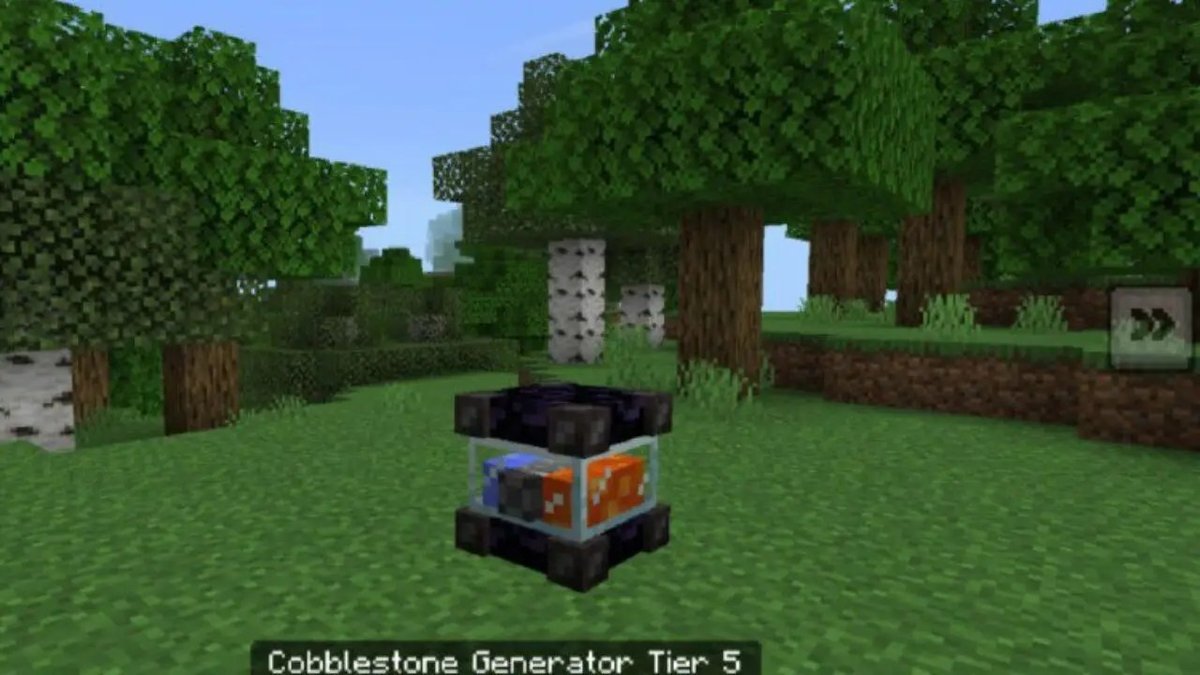
You're standing on the precipice of a Minecraft world transformed. No longer will you painstakingly dig into mountains or scour ravines for precious stone resources. Instead, you're about to master the art of endless material generation, gaining a foundational understanding of Cobblestone Generators: Basics and Mechanics. This isn't just about getting rocks; it's about unlocking efficient resource management, automating your builds, and even shaping the very landscape of your game without breaking a sweat (or a pickaxe, unnecessarily).
From simple manual setups to fully automated stone factories, cobblestone generators are a cornerstone of advanced survival and creative endeavors. Let's delve into how these ingenious contraptions work and how you can integrate them into your world.
At a Glance: Your Cobblestone Generator Journey
- Core Principle: Lava meets water, forms cobblestone. Remove, repeat.
- Why Build? Unlimited resources, environmental preservation, XP, villager trading, self-repairing structures.
- Safety First: Protect against obsidian formation, burning drops, and falling into lava.
- Pistonless Basics: Manual mining, but risk mitigation through design (hoppers).
- Piston Automation: Use Redstone clocks or block detectors to push new blocks, creating continuous output.
- Beyond Cobble: Generate smooth stone by making lava flow from above water.
- Advanced Farms: AFK setups dispense tools; semi-automatic designs produce large batches with a button press.
Why Every Crafter Needs a Cobblestone Generator
Imagine needing thousands of blocks for a grand castle, an extensive road network, or simply fueling your furnaces. Without a generator, you'd be condemned to endless mining, leaving unsightly holes across your landscape and constantly replacing worn-out tools. Cobblestone generators offer an elegant solution, producing an infinite supply of cobblestone (or even smooth stone and basalt) without altering the natural environment.
Players build these contraptions for a myriad of reasons:
- Unlimited Resources: The most obvious benefit. Never run out of building materials.
- Environmental Preservation: Generate blocks without digging up your beautiful world.
- Experience Points (XP): Smelting cobblestone into stone, and then stone into smooth stone, yields valuable XP.
- Villager Trading: Mason villagers love trading for cobblestone and stone, offering emeralds and other valuable items in return.
- Self-Repairing Structures: Advanced setups can feed blocks directly into walls or floors, automatically repairing damage from explosions or other sources.
- Map Adaptability: Essential for maps lacking natural stone, like Superflat worlds or skyblock challenges, where they provide the primary source of solid blocks.
It's clear: mastering cobblestone generation is a fundamental skill for any serious Minecraft player.
The Foundation: Basic Cobblestone Generation (Pistonless)
At its heart, every cobblestone generator relies on a simple, predictable interaction: when a lava stream comes into contact with a water stream, cobblestone is formed. Removing this newly formed cobblestone block allows the fluids to flow back together and create another piece, creating an endless cycle.
For your very first generator, you don't even need Redstone or pistons. A basic design is remarkably simple:
- Dig a Trench: Create a trench that's five blocks long and one block deep.
- The Gap: In the middle of this trench, leave a single block empty.
- Place Fluids: Place a water source block at one end of the trench and a lava source block at the opposite end.
- Generation: The water and lava streams will flow towards each other, meet in the empty gap, and voilà—a cobblestone block appears.
You can mine this block, and another will instantly form in its place. It's a perpetual cobblestone faucet! For a deeper dive into the step-by-step construction of various basic generators, you'll find an excellent resource that covers how to build a cobble generator.
Crucial Safety and Efficiency Considerations
While simple, basic generators have a few pitfalls to avoid:
- Obsidian Formation: A common beginner's mistake is letting flowing water directly touch a lava source block. This instantly converts the lava source into obsidian, halting your generator and requiring a diamond pickaxe to recover the obsidian (and reset the lava). Always ensure water only interacts with flowing lava, not the source itself.
- Protecting Your Drops: When you mine cobblestone directly adjacent to lava, there's a risk of the dropped item falling into the lava and burning up. To mitigate this:
- Non-flammable Cover: Place a non-flammable block (like stone, obsidian, or even a different type of generator block) directly over your lava source block. This not only protects mined drops from burning but also prevents you from accidentally falling into the lava while mining.
- Hoppers for Collection: A more sophisticated approach involves placing a hopper (or a hopper minecart) directly beneath the generated cobblestone block. When you mine the cobblestone, the drops fall into the hopper and are safely transported to a chest.
- Water Flow with Stairs: To prevent water from flowing over your lava source while still allowing cobblestone to form, consider placing a stair block in the water source, with its flat side facing the lava. This clever trick helps control water flow precisely.
Pistonless Generator Variations
Beyond the basic trench, several pistonless designs offer improved convenience or safety:
- Fountain-Style Generators: These often use two lava streams flowing onto a central water block, creating cobblestone in a convenient mining spot. The design can make it easier to collect drops or simply provide a more aesthetically pleasing setup.
- "From Below" Generators: Built on roofs or elevated platforms, these designs often use two lava streams to produce cobblestone where gravity can pull drops into a safe collection area below, minimizing loss. These are particularly popular in early game skyblock builds.
While these manual generators require active mining, they are fantastic for getting started and understanding the core mechanics before diving into Redstone-powered automation.
Stepping Up: Automating with Piston Generators
The real magic of cobblestone generation unfolds when you introduce pistons. Pistons transform a manual, block-by-block chore into a continuous, hands-free production line. Instead of you mining each block, the piston pushes the newly formed cobblestone away, allowing the lava and water to immediately generate another.
This automation is achieved through Redstone, specifically by using clock circuits or block detection circuits to actuate the piston.
- Redstone Clocks: A clock circuit provides a repeating Redstone pulse. For cobblestone generators, you need a clock that gives the lava and water enough time to form the new block before pushing it. A common choice is a 4-clock or a longer circuit with a total period of at least 7 or 8 game ticks. This ensures reliable generation without skipping blocks. For those looking to refine their understanding of Redstone, mastering understanding basic Redstone circuits is an invaluable step in automating any Minecraft build.
- Block Detectors: Alternatively, an observer block can be used as a "block detector." When a new cobblestone block appears, the observer detects the block change and sends a quick Redstone pulse to the piston, triggering it. This method is often more compact and ensures the piston only fires when a block is ready.
Components of a Piston Generator
Every automated cobblestone generator, whether simple or complex, shares a few key components:
- The Core: This is your basic water and lava setup that generates the cobblestone directly in front of the piston.
- The Trigger: This is your Redstone clock or block detector, providing the signal to actuate the piston.
- The Pusher: Typically a non-sticky piston, it pushes the newly formed cobblestone block. Sometimes, sticky pistons are used with a transparent block (like glass) to pull the block back, but non-sticky is standard for simple pushers.
- The Cap Block: Pistons can push a maximum of 12 blocks in a line. To prevent the piston from pushing an endless line (and eventually breaking), an "unpushable" block like a furnace, obsidian, or bedrock is often placed 12 blocks away from the piston's starting point, serving as a "cap."
Expanding Output: Secondary Pistons and Smart Automation
While a single piston can create a respectable line of cobblestone, advanced designs incorporate secondary pistons to extend the output beyond the standard 12-block limit. These secondary pistons can redirect the cobblestone row, pushing it into a different direction, or even into a designated storage area or a self-repairing structure.
For truly intelligent automation, some designs incorporate a "smart piston" system. This uses an observer to detect when a piston's output line is full. Once detected, the system can automatically redirect the block stream, send a signal elsewhere, or even stop generation until space is available. A smart piston might involve a nether quartz block, a note block, and an observer to trigger specific actions, pausing when its output is full and restarting with a simple note block click. Delving into advanced automation techniques in Minecraft can significantly boost your building capabilities.
Next Level: Quad-Piston and Basalt Generators
For players seeking even greater efficiency, Quad-Piston Generators are a game-changer. These advanced designs are engineered to produce four cobblestone blocks with every fourth piston cycle. They often push the blocks upward, providing an efficient way to prevent lava burn and facilitate collection.
The principles behind cobblestone generation are surprisingly versatile. With a few tweaks, you can convert a cobblestone factory into a Basalt Generator. Basalt, a dark and visually distinct block, is formed when lava flows onto soul soil that is adjacent to blue ice. To achieve this, you'd make all pistons sticky, place soul soil atop them, blue ice above that (where water would typically go), and lava in the middle. Knowing how to build a basalt generator opens up even more aesthetic and functional building opportunities.
Beyond Cobblestone: Generating Smooth Stone
Cobblestone is great, but what if you need smoother, more refined blocks for your builds? That's where Stone Generators come in. While cobblestone forms when lava streams touch water streams, smooth stone is created when lava flows directly into water from above.
Stone has several advantages:
- Aesthetics: It's visually smoother and more appealing for many building projects.
- Faster Mining: Stone mines slightly faster than cobblestone.
- Silk Touch Friendly: With a Silk Touch pickaxe, you can collect stone directly, bypassing the need to smelt cobblestone.
- Smelting XP: As mentioned, smelting cobblestone into stone, and then stone into smooth stone, is a fantastic source of XP.
Stone generators are almost exclusively piston-based due to the precise placement required for the lava and water interaction. A single-piston design can produce a row of up to 13 stone blocks.
Examples of Stone Generators:
- Smooth Stone Generator A: This common design involves a 4x5x2 hole. A piston pushes stone upward, often driven by a Redstone clock, creating a continuous column of stone.
- Smooth Stone Generator B: A more compact, clockless design that relies on a Block Update Detector (BUD) switch. This generator requires a gravity block (like sand or gravel) on top of a glass block to trigger the BUD switch, and it often only works with output to the east or west due to game mechanics.
The Ultimate Convenience: AFK and Semi-Automatic Stone Farms
Once you've mastered the basics, you might crave truly hands-off or high-volume production. This is where AFK (Away From Keyboard) Stone Farms and Semi-Automatic Stone Generators shine.
AFK Stone Farms
These farms are designed for continuous, unattended mining. You simply stand in a designated spot, and the farm handles the rest. Key features include:
- Auto-Pickaxe Dispensing: When your pickaxe breaks, a dispenser automatically supplies a new one, allowing for truly infinite mining sessions.
- Water Transport/Hoppers: Instead of manual collection, items are often transported via water streams or hopper chains to a central storage chest.
- Protected Water Sources: To prevent accidental obsidian formation, water sources are often placed inside waterlogged blocks (like stairs or slabs), ensuring they always interact with flowing lava rather than lava source blocks. Optimizing your mining operations through such automation can save countless hours.
Semi-Automatic Stone Generator
This type of generator provides a large batch of stone with a single button press, offering significant output without requiring constant manual effort. A common design can produce 24 stone blocks at once.
Construction (Structure):
- Space: You'll need a space that's at least 4 blocks high.
- Dispenser: Place a downward-facing dispenser on the ceiling. This will hold your lava bucket.
- Mining Point: Directly below the dispenser, stack two blocks (obsidian is ideal for iron or diamond picks, but any non-flammable block works). These are your mining targets.
- Perimeter: Create a fence perimeter four blocks distant from the two-block stack. Connect the corners diagonally. This acts as a splash guard and helps contain the water.
- Water Sources: Place water source blocks on the floor around the two-block tower, filling the perimeter (but exclude the two-block tower itself).
- Lava: Place a lava bucket inside the dispenser.
Construction (Redstone Repeat Circuit):
- Sticky Piston: Above the farm, place an upward-facing sticky piston with an opaque block on top. This piston will push the gravity block to trigger the generation.
- Button & Dispenser Circuit: Connect Redstone dust from a button to the dispenser.
- Repeating Circuit: Create a repeating Redstone circuit, typically involving four Redstone repeaters, each set to a 4-tick delay and facing different directions, forming a loop.
- Piston Connection: Connect Redstone from the loop to another circuit with five repeaters (four also set to a 4-tick delay), leading to the sticky piston.
Pressing the button initiates a timed sequence: lava flows out, forms stone, then retracts, producing a batch of 24 blocks. It's a fantastic blend of automation and control for on-demand resource generation.
Troubleshooting and Optimizing Your Generator
Even seasoned builders encounter issues. Here's a quick guide to common problems and best practices:
- Obsidian Formation: Double-check your lava and water source placement. Water should never touch a lava source block. If using flowing lava, ensure it's contained and only interacts with the water stream at the intended point.
- Lost Drops: Ensure your mining area is safe. Place hoppers directly beneath the generation point, or use a non-flammable block above the lava to catch drops.
- Piston Jams: If your piston stops pushing, check for the 12-block limit. Is there a cap block? Is there an obstruction in the line? Ensure your Redstone clock is functioning correctly and providing consistent power.
- Inefficient Collection: For larger automated farms, consider building a comprehensive hopper network leading to a robust storage system (e.g., a multi-chest array or even a rudimentary item sorter).
- Villager Trading: If you're building generators for trade, remember to link your output to a storage system easily accessible by Mason villagers. An efficient setup for efficient trading strategies with villagers can turn your endless stone into emeralds, opening up a world of rare items.
Your Next Build: Empowering Your Minecraft World
Whether you're building your first basic cobblestone maker or designing an intricate multi-block stone factory, understanding the mechanics of these generators unlocks a new level of efficiency and creativity in Minecraft. You're no longer limited by the finite resources of your world but empowered to create an infinite supply of the building blocks that make up its very foundation.
Experiment with different designs, integrate them into larger Redstone contraptions, and watch your resource woes disappear. From crafting to construction, these generators are the silent workhorses that will fuel your most ambitious projects. Now go forth and build, confident in your newfound mastery of unlimited materials!